| I | INTRODUCTION |
Animal, multicellular organism that obtains energy by
eating food. With over 2 million known species, and many more awaiting
identification, animals are the most diverse forms of life on earth. They range
in size from 30-m (100-ft) long whales to microscopic organisms only 0.05 mm
(0.002 in) long. They live in a vast range of habitats, from deserts and Arctic
tundra to the deep-sea floor. Animals are the only living things that have
evolved nervous systems and sense organs that monitor their surroundings. They
are also the only forms of life that show flexible patterns of behavior that can
be shaped by past experience. The study of animals is known as zoology.
Most animals start life as a single fertilized
cell, which divides many times to produce the thousands or millions of cells
needed to form a functioning body. During this process, groups of cells develop
different characteristics and arrange themselves in tissues that carry out
specialized functions. Epithelial tissue covers the body’s inner and outer
surfaces, while connective tissue binds it together and provides support.
Nervous tissue conducts the signals that coordinate the body (see Nervous
System), and muscle tissue–which makes up over two-thirds of the body mass of
some animals–contracts to make the body move. This mobility, coupled with rapid
responses to opportunities and hazards, is one feature that distinguishes
animals from other forms of life.
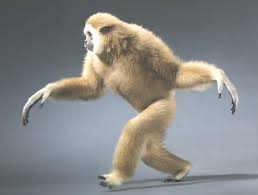
Animal life spans vary from less than 3 weeks
in some insects to over a century in giant tortoises. Some animals, such as
sponges, mollusks, fish, and snakes, show indeterminate growth, which means that
they continue to grow throughout life. Most, however, reach a pre-defined size
at maturity, at which point their physical growth stops.
II | TYPES OF ANIMALS |
Presently, animals are classified according
to a broader range of characteristics, including their internal anatomy,
patterns of development, and genetic makeup. These features provide a much more
reliable guide to an animal’s place in the living world. They also help to show
how different species are linked through evolution. Scientists divide the animal
kingdom into approximately 30 groups, each called a phylum (plural phyla).
| A | Vertebrates and Invertebrates |
Vertebrates total about 40,000 species.
Thanks to their highly developed nervous systems and internal skeletons, they
have become very successful on land, sea, and air. Yet vertebrates account for
only about 2 percent of animal species. The remaining 98 percent, collectively
called invertebrates, are far more numerous and diverse and include an immense
variety of animals from sponges, worms, and jellyfish to mollusks and insects.
The only feature these diverse creatures share in common is the lack of a
backbone.
Some invertebrate phyla contain relatively
few species. An extreme example is the phylum Placozoa, which contains just one
species. Measuring less than 0.5 mm (0.02 in) across, this unique animal was
first discovered in 1883 in a saltwater aquarium in Austria. Its flat body
consists of just two layers of cells, making it the simplest known member of the
animal kingdom, although not the smallest. Another minor phylum, the
loriciferans, was classified in 1983 with the chance discovery of a tiny
organism dredged up in marine gravel. Several other species of loriciferans have
since been identified, but little is known about how they live.
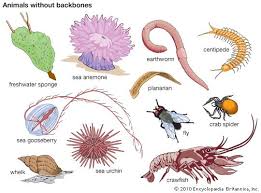
At the other end of the spectrum, some
invertebrate phyla contain immense numbers of species. These major phyla include
the annelids (segmented worms), with 12,000 known species; the nematodes
(roundworms), also with 12,000 known species; and the mollusks, including
bivalves, snails, and octopuses, with at least 100,000 species. The arthropods,
with about 1 million known species, include the insects, spiders, and
crustaceans. These figures include only species that have been described and
named, which are only a portion of those that actually exist. Some biologists
estimate that the total number of nematode species may be as high as a quarter
of a million, while the total number of arthropods could exceed 10 million.
Compared to vertebrates, most
invertebrates are animals of modest dimensions. Giant squids, which are the
largest invertebrates, can exceed 18 m (60 ft) in length, but the great majority
of invertebrate animals are less than 2.5 cm (1 in) long. Their small size
enables them to exploit food sources and infiltrate habitats that larger animals
cannot use, but it also leaves them exposed to changing environmental
conditions. This is not often a problem in the sea, but it can create
difficulties on land. Land-dwelling invertebrates have to cope with the constant
threat of drying out, and most of them quickly become inactive in low
temperatures.
| B | Cold-blooded and Warm-blooded Animals |
Vertebrates are customarily divided into
cold-blooded and warm-blooded animals, but these labels are not very precise.
Biologists normally use the terms ectoderm and endoderm to
describe temperature regulation more accurately. An ectoderm is an animal whose
temperature is dictated by its surroundings, while an endoderm is one that keeps
its body at a constant warm temperature by generating internal heat.
| III | ANIMAL HABITATS |
Few parts of Earth’s surface are entirely
devoid of animal life. Animals cannot survive in places where water is
unavailable or permanently frozen, or where temperatures regularly exceed 55° C
(130° F). However, in all habitats that lie between these extremes, animal life
abounds.
| A | Aquatic Habitats |
Animal life first arose in water.
Millions of years later, marine and freshwater habitats continue to support a
large proportion of the animal life on earth. Aquatic habitats—particularly in
the seas and oceans–rarely experience abrupt changes in conditions, which is a
major advantage for living things.
In the seas and oceans, the greatest
diversity of animal life is found in habitats close to shores. The richest of
all these habitats are coral reefs, underwater ridges that form in clear water
where the minimum temperature is 20° C (68° F) or above. Coral reefs are
composed of an accumulation of the remains of coral—invertebrates with stony
skeletons—calcareous red algae, and mollusks. One of the reasons for the great
diversity of animal life in reefs is that living coral creates a complex
three-dimensional landscape, with many different microhabitats. The smallest
crevices provide hiding places for scavengers such as crabs and shrimps, while
larger ones conceal predators such as octopuses and moray eels. Over half the
world’s fish species live in coral reefs, many hiding away by day and emerging
after dark to feed.
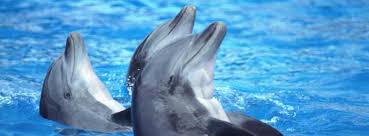
On reefs and rocky shores, many animals
are sessile, meaning that they spend their entire adult lives fixed in one
place. These species, which include sponges, barnacles, and mollusks, as well as
reef-building corals themselves, typically spend the early part of their lives
as drifting larvae, before settling on a solid surface and changing shape.
Sessile animals are common in aquatic habitats because it is relatively easy for
them to collect food, which typically is pushed in the animal’s direction by
water currents. By contrast, very few sessile animals have evolved on land.
In open water, depth has a marked
influence on animal lifestyles. The surface layers of the open sea teem with
small and submicroscopic animals, which feed either on algae and other plantlike
organisms or on each other. These animals form part of the plankton, a complex
community of living things that drifts passively with the currents. Many
planktonic animals can adjust the depth at which they float, but larger animals
such as fish, squid, and marine mammals, are strong enough to commute between
the surface and the depths far below.
Even in the clearest water, light quickly
fades with increasing depth. Deeper than about 150 m (500 ft), not enough light
penetrates for photosynthesis to occur, so algae are unable to survive. With
increasing depth, water pressure rises and temperature falls, ultimately coming
close to the freezing point on the ocean floor. Despite these extreme
conditions, animal life is found in the ocean’s greatest depths, fueled by the
constant rain of organic debris that drifts down from far above. In a habitat
where prey is widely scattered, many deep-sea fish can swallow animals larger
than themselves, an adaptation that allows them to go weeks or months between
meals.
| B | Land Habitats |
On land, animal habitats are strongly
influenced by climate, the combination of precipitation and temperature
conditions experienced in a region. At or near the equator, year-round moisture
and warmth generates a constant supply of food. Further north or south, seasonal
changes become much more pronounced, shaping the type of animals that live in
different habitats and their strategies for survival (see Animal
Distribution).
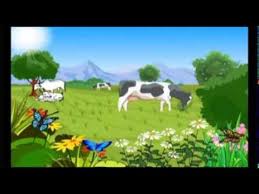
Tropical and subtropical forests are home
to by far the largest number of animal species on land. These animals include
the majority of the world’s insects, most of its primates, and a large
proportion of its birds. Tropical forests have existed longer than any other
forests on earth and their plants and animals have evolved an elaborate web of
interrelationships.
Much of the animal life of tropical
forests is still poorly known, and new species are constantly being discovered.
The majority of these newly identified animals are invertebrates, but larger
animals have also come to light during the 20th century. Major discoveries have
included three large but secretive plant-eating mammals: the okapi, discovered
in Central Africa in 1900; the kouprey, discovered in the forests of Cambodia in
1937; and the sao la, which was identified in forests bordering Laos and Vietnam
in 1993.
Unlike tropical forests, temperate
forests provide animals with an abundance of food during spring and summer, but
a dearth during the winter. In this habitat, animals have evolved several
different strategies for avoiding starvation during the winter months. Food
hoarders, such as squirrels and jay birds, bury surplus food during the fall,
and dig it up again when other food supplies run out. Other forest animals, such
as the common dormouse, avoid food shortages by hibernation, a period of
inactivity when body temperature is lowered. A third group of animals—composed
chiefly of birds, but also including some bats and insects–migrates to warmer
regions before the winter begins and returns again in spring. In boreal forests,
which are found in the far north, the seasonal swings are more extreme. Here
only a few species stay and remain active during the winter months.
For land animals, the most testing
habitats are ones that experience intense drought or extreme cold. Desert
animals cope with heat and water shortage by behavioral adaptations, such as
remaining below ground by day, and also by physiological adaptations. North
American kangaroo rats, for example, can live entirely on dry seeds without ever
drinking liquid water. They do this by losing very little moisture from their
bodies and using all the “metabolic water” that is formed when food is broken
down to release energy.
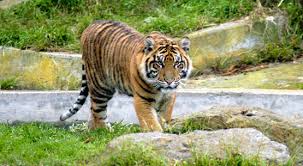
In tundra and on polar ice, winter air
temperatures can fall to below -40° C (-40° F), which is far colder than the
temperature of the surrounding seas. The smallest inhabitants of tundra, which
include vast numbers of mosquitoes and other biting flies, spend winter in a
state of suspended animation and are kept alive by chemical antifreeze within
their tissues. The few animals that do remain active on land or ice during
winter, such as seals and male emperor penguins, rely on a thick layer of
insulating fat to prevent their body heat leaking away. Without this fat, they
would die within a matter of minutes.
| IV | FEEDING |
Animals all feed on organic matter, but
their diets and way of obtaining food vary enormously. Some animals are
omnivores, meaning that they are capable of surviving on a very wide range of
foods. Many other animals, from giant pandas to fleas, have extremely precise
requirements and cannot deviate from their highly specialized diet.
| A | Herbivores and Carnivores |
In general, animals eat plants, other
animals, or the remains of living things. Plant-eaters, or herbivores, often do
not have to search far to find things to eat, and in some cases—for example
wood-boring insects—they are entirely surrounded by their food. The disadvantage
of a plant-based diet is that it can be difficult to digest and is often low in
nutrients.
To overcome the first of these problems,
most herbivores have tough mouthparts for chewing and grinding their food. Many
plant-eating animals, from termites to cattle, have complex digestive systems
containing microorganisms that break down cellulose and other indigestible plant
substances, turning them into nutrients that the animals can absorb. The second
problem—lack of nutrients–is harder to sidestep, particularly in a diet made up
largely of leaves. As a result, leaf-eaters often have to feed for many hours
each day to obtain the nutrients that they need.

Carnivores live on flesh from other
animals that is often nutrient-rich and easy to digest but difficult to obtain.
Finding and capturing this kind of food calls for keen senses. But even though a
hunter has acute vision or a highly developed sense of smell, a large proportion
of a hunter’s victims manage to escape. If this happens too often, a predator
quickly starves.
Some mammalian predators, such as the lion
and wolf, increase their chances of success by hunting in groups. While this
strategy enables them to tackle larger prey, a successful kill has to be shared
among members of the group. But in the animal world as a whole, many other
predators adopt a less energy-intensive approach to catching their food. Instead
of actively searching out their prey, they position themselves in a suitable
location and wait for their prey to come within striking distance.
In this method of hunting, camouflage and
other forms of deception play a prominent role. Most animals that use a
lie-and-wait strategy blend in with their surroundings, but a few use lures to
entice their prey within range. A typical example is the alligator snapping
turtle of North America, which waves a ribbon of pink flesh on its tongue that
resembles a worm. Any fish venturing toward it is swallowed whole.
In predatory animals, teeth or other
mouthparts often play a part in catching and subduing food as well as in
preparing it for digestion. These mouthparts include canine teeth in carnivorous
mammals, venomous fangs in snakes, and poisonous “harpoons” in some marine
mollusks. These harpoons can impale and kill small fish. Each harpoon is used
just once, and afterwards it is expelled and another is formed in its
place.
| B | Other Feeding Strategies |
Most predators hunt the largest animals
that they can catch without putting themselves unduly at risk. However, some
animals concentrate on food items that are much too small to be worth collecting
one by one. Instead of catching food individually, they have special feeding
adaptations for sweeping it up in bulk.
On land, these animals include
insect-eating mammals, such as anteaters and pangolins. Using their long and
sticky tongues, they lick up ants and termites and can consume over 20,000
insects a day. In water, this kind of feeding strategy is mirrored by animals
called filter feeders, which sieve small animals or food particles from their
surroundings. Many of these filter feeders are sessile animals that sieve food
from the water immediately around them. Others, such as some whales, scoop up
their food while on the move and filter it out in their mouths, using
specialized gills or plates of a fibrous material called baleen. This feeding
technique is extremely efficient, allowing whales to grow to an immense
size.
In another feeding technique, predators
seek out sources of food that are much larger than themselves but only eat part
of their prey—usually its blood.
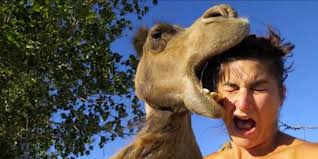
This way of life is has been pursued with great success by several groups of flying insects, such as mosquitoes and horseflies. But in the animal world as a whole, fluid diets are much more common in animals that feed on plants. Aphids, cicadas, and other true bugs use piercing mouthparts to suck sap from plant stems. Many different animals, including moths, butterflies, hummingbirds, and bats, use probing beaks and tongues to reach nectar in flowers.
This way of life is has been pursued with great success by several groups of flying insects, such as mosquitoes and horseflies. But in the animal world as a whole, fluid diets are much more common in animals that feed on plants. Aphids, cicadas, and other true bugs use piercing mouthparts to suck sap from plant stems. Many different animals, including moths, butterflies, hummingbirds, and bats, use probing beaks and tongues to reach nectar in flowers.
To avoid the need to track down food,
some animals use a highly specialized feeding strategy, called parasitism
(see Parasite). A parasite lives on or inside other animals and simply
siphons off some of its host’s food or, more commonly, feeds on the host itself.
External parasites, such as fleas, have well-developed senses and adaptations
that enable them to cling to their hosts. Internal parasites, such as tapeworms
and liver flukes, are highly modified for a life inside their hosts. The sense
organs of internal parasites are rudimentary or absent because they do not need
to find food or avoid enemies. Instead, they devote their time entirely to the
twin tasks of feeding and reproduction.
| V | BREATHING |
Wherever they live, animals need oxygen in
order to survive. By breathing, or respiring, they extract oxygen from their
surroundings and dispose of carbon dioxide waste (see Respiration).
Very small animals do not need any special
adaptations for obtaining oxygen. Oxygen simply diffuses in through their body
surface, with carbon dioxide traveling out the same way. Larger animals cannot
rely on this system because they have a much bigger volume relative to their
surface area. To obtain sufficient oxygen, large animals have to boost their
oxygen intake by using special respiratory organs. In water, many animals
breathe by using gills. A typical gill consists of a stack of thin flaps
connected to the animal’s blood supply. Water moves past the flaps in a one-way
flow, either when the animal moves, or when it pumps water through its body.
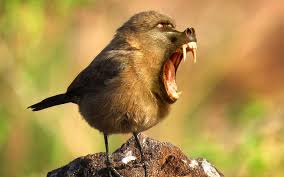 The
flaps extract oxygen from the water and pass it into the blood, which transfers
it to needed tissues. The blood releases carbon dioxide in exchange.
The
flaps extract oxygen from the water and pass it into the blood, which transfers
it to needed tissues. The blood releases carbon dioxide in exchange.
Gills do not work on land because their
flaps collapse and stick together. Instead, land animals have evolved two
different kinds of respiratory organs: tracheal systems and lungs. Tracheal
systems are found in insects and many other arthropods. They consist of slender
hollow tubes, called tracheae, that reach deep into the body, delivering oxygen
from outside. Lungs are hollow cavities that have a large surface area. They are
found in vertebrates and also in some invertebrates, such as terrestrial
mollusks.
In tracheae and most lungs, gases move in a
two-way flow. Most vertebrates actively pump air in and out of their lungs to
step up the rate of gas exchange. By stretching and squeezing their bodies, some
arthropods behave in a similar way.
| VI | MOVEMENT |
All animals can move parts of their bodies.
The majority are also capable of locomotion—movement of the whole body from
place to place. Many simple animals, such as rotifers and flatworms, move with
the help of microscopic hairlike structures called cilia. These beat in a
coordinated way, propelling the animal through water or making it glide over
solid surfaces at the rate of a few inches an hour. Another form of creeping
movement, seen in earthworms, involves changes in body shape. The worm’s
segments extend and contract in a set sequence, allowing it to force its way
through the surrounding soil.

Some of the earthworm’s relatives have
flaps called parapodia that help them to move, but even with these, their speed
is fairly modest. With a few notable exceptions—such as squid and octopuses,
which can move by a form of jet propulsion—the fastest animals by far are ones
that have skeletons and jointed limbs.
| A | Jointed Limbs |
Jointed limbs are found in only two
groups of animals: the arthropods and vertebrates. An arthropod’s limbs are made
of a number of hard tubular segments, which form part of its external skeleton,
or exoskeleton. The muscles that operate them are hidden away inside this strong
outer framework. In vertebrates, the plan is reversed. The bony skeleton forms
an internal framework, with muscles attached around it.
During the course of evolution, both
these kinds of limbs have become modified in many different ways. Aquatic
animals often have paddlelike limbs that push against the water, enabling them
to speed away from predators or after food, or to maneuver their way around
confined spaces. On land, the fastest animals, such as the horse and cheetah,
have long legs and a flexible backbone, which helps to increase the length of
their stride. Land animals that move by jumping often have highly developed hind
legs, with extra-large muscles. In fleas, the muscles squeeze an elastic
material called resilin, which flicks the legs back when released. This
extremely rapid flick is faster than a jump triggered by muscles alone, and it
throws a flea up to 30 cm (12 in) into the air.
Many animals can glide, but only insects,
birds, and bats are capable of powered flight. The fastest flying insects are
dragonflies, which can reach speeds of about 29 km/h (about 18 mph) in short
bursts. However, in terms of speed and endurance, birds are by far the most
successful animal aviators. Swans and geese can cruise at 64 km/h (40 mph) for
many hours at a time, while peregrine falcons can briefly reach 145 km/h (90
mph) when they swoop down on their prey.
| B | Patterns of Movement |
Being able to move gives animals many
advantages, but it also generates its own demands. For any animal, random
movement can be unhelpful or even dangerous. To be useful, movement has to be
carefully guided.
Animals are guided by their senses, which
provide feedback about their changing surroundings. In animals that have radial
symmetry (symmetry around a central point), such as jellyfishes, sensory nerves
are arranged more or less evenly around the body. This arrangement makes the
animal equally sensitive to stimuli from any direction. In bilaterally
symmetrical animals (animals made of equal halves), sensory nerves are
concentrated in the head. They convey signals to the brain from organs such as
ears and eyes, telling an animal about the surroundings that it is about to
encounter.
These sensory systems help animals to
move toward food and away from possible danger. On a longer time span, they also
guide them through much more complex patterns of movement that are essential for
their survival. These movements include special kinds of behavior needed to
locate a partner, and also seasonal movements or migrations.
Some of the shortest migrations are
carried out by microscopic flatworms that live on sandy shores. These worms
migrate up to the surface of the sand at low tide and back into it at high
tide—a total distance of about 20 cm (about 8 in) roughly twice a day. In the
open ocean, many planktonic animals carry out larger daily migrations, rising to
the surface at dusk and then sinking at sunrise. By doing this, they reduce the
chances of being eaten.
The longest migrations are annual ones,
undertaken by animals in response to the changing seasons. By carrying out these
journeys, animals can breed in places where food is abundant for just a few
months each year. Long-distance annual migration is seen in some plant-eating
mammals, such as wildebeest and caribou, and also in whales, but it is most
common in animals that fly. Some birds, such as terns and shearwaters, migrate
over 32,000 km (20,000 mi) each year. Research has shown that during these epic
journeys, they use a variety of cues to help them navigate. These include
familiar landmarks, the position of the sun and stars, and the also the
orientation of Earth’s magnetic field (see Animal Migration).
| VII | REPRODUCTION |
Like all living things, animals have
limited life spans. Although individual animals eventually die, reproduction
ensures that they hand on their characteristics to future generations. Animals
reproduce at markedly different rates, but all have the potential to increase
their numbers if resources allow it. In practice, sharp increases are rare, kept
in check by predators and food shortages.
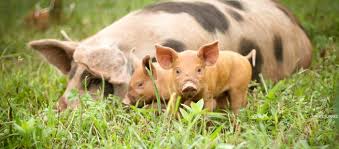
| A | Forms of Reproduction |
Animal reproduction takes two overall
forms. In the first form, called asexual reproduction, animals produce offspring
without needing a partner. Asexual reproduction is most common in simple animals
such as flatworms and cnidarians. In flatworms, the parent often develops a
constriction in its body, and the rear part eventually tears itself free. The
rear part grows a new head, while the front part grows a new tail. Some
cnidarians can also divide in two, but many reproduce by a different process,
called budding. During budding, a small outgrowth of the body slowly develops
into a complete new animal, which eventually takes up life on its own.
Asexual reproduction also occurs in
insects such as aphids and in a few unusual vertebrates, such as whiptail
lizards. However, in general, it is rarely used as an animal’s sole method of
reproduction. This is because asexual reproduction produces offspring that are
genetically identical to their parent. They inherit all their parent’s weak
points and are equally vulnerable if a disease or other changes in the
environment threaten the group’s survival.
A second and much more common form of
reproduction, sexual reproduction, involves two parents. The parents produce
sperm and egg cells (gametes), which are brought together to form a fertilized
cell (zygote) with a new and unique combination of genes. In this genetic
lottery, offspring inherit unique combinations of characteristics that increase
the likelihood that at least some individuals in the population can survive
changes in the environment.
Sexual reproduction is used by the vast
majority of the world’s animals. However, a significant number of species,
particularly in the world of insects, use both forms of reproduction at
different stages of their life cycles. They reproduce asexually when food is
abundant, but turn to sexual reproduction when conditions become more
severe.
| B | Reproductive Strategies |
Asexual reproduction is relatively easy
to achieve because it involves only a single animal. Sexual reproduction is much
more complex because the partners often have to find each other and precisely
coordinate their reproductive behavior. In most cases, each partner is either
male or female, but in some animals—such as earthworms, slugs, and snails–each
one is a hermaphrodite, an animal that has both male and female organs.
Hermaphrodites usually fertilize each other, with both partners producing young
(see Hermaphroditism).
Most aquatic animals shed their eggs and
sperm into the water, where external fertilization takes place. In corals and
many other sessile species, the moment of spawning is often triggered by the
tides, maximizing the chances that the egg and sperm will meet. In a minority of
marine animals, fertilization is internal, meaning that the male mates with the
female, inserting his sperm into her body. For this to work, the male needs
special adaptations to make the transfer. Male sharks and rays use special
claspers that are attached to their pelvic fins, while barnacles, which are
often hermaphrodites, use a threadlike penis that can be almost as long as their
bodies.
On land, external fertilization is rare
because egg and sperm cells cannot survive for long in the open. As a result,
almost all land animals must mate to trigger internal fertilization in order to
reproduce. Different groups of animals have evolved a wide variety of mechanisms
to make sure that males and females manage to locate suitable partners. Some
female insects emit chemicals called pheromones, which guide males towards them,
while others use sound signals or biochemically produced light (see
Bioluminescence). In birds, elaborate plumage and courtship displays help to
attract females towards the males (see Animal Courtship and Mating).
The males of many insects and virtually
all mammals use a penis to transfer sperm to the female, who harbors the eggs,
in a process known as copulation. The penis ensures that sperm is transferred
successfully without being carried away by wind, water, or other environmental
elements. Most birds and reptiles mate using a cloaca, a single opening located
on the lower abdomen. During mating, these animals align their cloacas for
transfer of sperm. Some birds, such as bald eagles, can perform this feat in
mid-air.
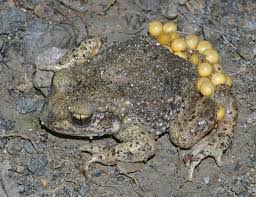
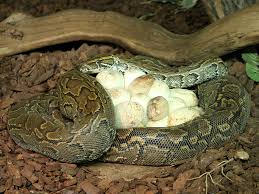
Once a female has mated, egg development
can proceed in two different ways. In oviparous species, which include the
majority of vertebrates except mammals, and also most insects, the fertilized
eggs are laid and develop outside the mother’s body. In viviparous animals,
which include nearly all mammals together with some reptiles and sharks, the
young develop inside the mother and are born live.
Most animals that are born live look
similar to their parents, although they are not fully developed. By contrast,
many egg-laying invertebrates look completely different from their parents when
they hatch and often live in a completely different way. Known as larvae, these
young change shapes as they grow up, during a process called metamorphosis.
Larvae are also found in some fish and most amphibians.
| C | Mating Systems |
Animals that reproduce sexually have
evolved a wide variety of different systems for maximizing the number of young
that can be raised. In the simplest system, each female is partnered by a male,
and the partnership lasts for life. In more complex systems, the fittest adults
have many partners while others have none at all.
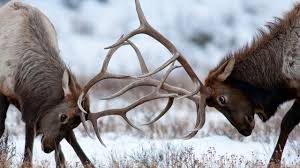
In polygynous breeding systems,
successful males mate with more than one female. Polygyny is common in birds,
particularly in species where the males establish breeding territories that
provide access to food. A male with a good territory may attract several mates,
while one with an inferior territory may attract few or none. Polygyny can also
be seen in some mammals and is taken to extremes in species such as elephant
seals. The largest and most powerful male elephant seals, weighing up to four
times as much as the females, clash viciously for dominance on a breeding beach.
A successful male can assemble a harem of over twenty females, but weaker males
are excluded from breeding altogether.
In polyandrous breeding systems, one
female mates with several males. This kind of breeding system is rare and
usually occurs in species where the males take on the work of raising the young.
An example of a polyandrous bird is the North American spotted sandpiper. In
this species, females compete for males. A single female can lay up to five
sets, or clutches, of eggs, and each clutch is incubated by a different
partner.
The most specialized mating systems of
all occur in animals that form permanent family groups. In social insects, which
include many bees and wasps and all ants and termites, each group or colony is
founded by a single female or queen. The queen is the only individual in the
colony to reproduce. Her offspring, which can number more than a million, forage
for food, maintain the nest, and care for the young.
| D | Parental Care |
With the exception of birds, the
majority of egg-laying animals play no part in helping their young to survive. A
large proportion of their young die, and to offset this, they often produce a
huge number of eggs. A housefly, for example, can lay over a thousand eggs in
the course of its life, while a female cod can lay 3 million.
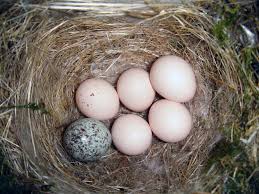
Most amphibians and reptiles lay smaller
clutches of eggs, and some of them remain with their eggs and guard them until
they hatch. Birds lay smaller clutches still, and the parents incubate the eggs,
or keep them warm until they hatch, and continue to care for their young once
they have hatched. Most ground-nesting species protect their young and lead them
to food, but typical tree-nesting birds provide their young with both food and
shelter until they are able to fend for themselves. Without this parental care,
the young birds would have no hope of survival.
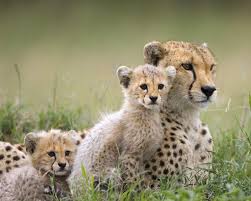
Parental care is equally important in
mammals, which provide food for their young in the form of milk. Raising a
family in this way creates a close link between the mother and her young. This
method also allows the young to learn important patterns of behavior by watching
their mother at work. In small rodents, this learning period lasts for just a
few days, but in larger mammals, it can last for more than a year.
| VIII | STRATEGIES FOR SURVIVAL |
In the living world, resources such as
food and space are limited. As a result, survival is a constant struggle.
Through evolution, animals have developed a range of adaptations that give them
the best chances of success.
The most obvious of these adaptations are
physical ones that affect the shape or structure of an animal’s body. Equally
important, although often less conspicuous, are adaptations that affect behavior
and body processes. Together, these different adaptations allow each species to
pursue a distinctive way of life.
| A | Physical Adaptations |
The need to eat exposes animals to the
danger of being attacked and eaten themselves. To avoid this fate, all animals
have physical adaptations that enable them to escape being attacked or to
survive an attack once it is underway.
The simplest form of defense is a rapid
escape, which calls for keen senses and well-developed systems for movement.
Many plant-eating mammals depend on this strategy for survival and must maintain
a constant lookout for danger. A less-demanding survival strategy, found in many
small animals such as insects, involves deception. These animals use camouflage
to blend in with their backgrounds, or they mimic inedible objects such as twigs
or bird droppings. If a predator does come too close, they still have the option
of making a dash for safety.
A more sophisticated form of mimicry
occurs in animals that resemble species that are poisonous. This is common in
insects, and it also occurs in some snakes. Poisonous insects, such as bees and
wasps, are often brightly colored to warn other animals that they are best left
alone. By adopting these colors and developing similar body shapes,
non-poisonous insects benefit from the same protection. The physical adaptations
involved can be elaborate. The hornet clearwing moth, for example, is yellow and
brown like a stinging hornet. On its first flight, it loses most of its wing
scales, resulting in transparent wings that make the resemblance even more
convincing.
An alternative defense, seen in a wide
range of animals, uses armor or spines to fend off an attack. Animal armor
includes hard shells, overlapping scales, and in the case of armadillos, bands
of hardened plates connected by areas of softer skin. If they are threatened,
many of these animals can shut their bodies away inside their armor, making them
difficult to attack. The disadvantage of this defense is that the animal cannot
escape. If its armor is broken open, death is almost certain.
| B | Behavioral Adaptations |
In simple animals, behavior is governed
almost entirely by instinct, meaning that it is pre-programmed by an animal’s
genes. In more complex animals, instinctive behavior is often modified by
learning, producing more-flexible responses to the outside world.

Many forms of behavior help animals to
survive severe environmental conditions. Two examples are hibernation, which
enables animals to survive cold and food shortages in winter; and estivation,
which allows animals to survive drought and heat in summer. True hibernators,
such as bats and some rodents, become completely inactive during winter, and
their body temperature falls close to freezing. While in this state, they
survive entirely on food reserves stored in their bodies. Estivating animals,
which include land snails and some amphibians, seal themselves up when
conditions become dry and only become active again when it rains. Between these
two extremes, many other animals show less drastic patterns of behavior that are
triggered by cold or heat. Winter wrens, for example, often crowd together for
sleep when temperatures fall below freezing. On warmer nights, they sleep on
their own.
Special forms of behavior also help
animals to find food, to avoid being eaten, and to protect their young. One of
the most advanced forms of this behavior is the use of tools. Several kinds of
animals, particularly primates and birds, pick up implements such as twigs and
stones and use them to get at food. More rarely, some tool-using animals seek
out a particular object and then shape it so that it can be used. Woodpecker
finches probe for insect grubs by making tools from cactus spines, and
chimpanzees sometimes dig for termites using specially prepared twigs.
Defensive behavior is exhibited by
individual animals and also by animal groups. Group defense is common in herding
mammals, particularly in species such as the musk-ox, which form a protective
ring around their calves when threatened by wolves. It can also be seen in
swallows, starlings, and other songbirds, which instinctively mob hawks and
other birds of prey. By grouping together to harass their enemies, they reduce
the chances that they or their young will be singled out and attacked.
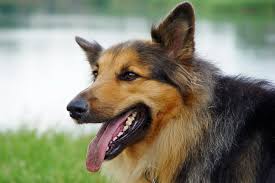
Individual defensive behavior is often
based on threatening gestures that make an animal look larger or more dangerous
than it actually is. Sometimes it involves some highly specialized forms of
deception. One of the most remarkable is playing dead. Seen in animals such as
the Virginia opossum and some snakes, this last-ditch defense is effective
against predators that habitually hunt moving prey but leave dead animals alone.
After the predator has inspected the “dead” animal and moved on, the prey comes
back to life and makes its escape.
| IX | ORIGINS OF ANIMALS |
Most biologists agree that animals evolved
from simpler single-celled organisms. Exactly how this happened is unclear,
because few fossils have been left to record the sequence of events. Faced with
this lack of fossil evidence, researchers have attempted to piece together
animal origins by examining the single-celled organisms alive today.
Modern single-celled organisms are
classified into two kingdoms: the prokaryotes and protists. Prokaryotes, which
include bacteria, are very simple organisms, and lack many of the features seen
in animal cells. Protists, on the other hand, are more complex, and their cells
contain all the specialized structures, or organelles, found in the cells of
animals. One protist group, the choanoflagellates or collar flagellates,
contains organisms that bear a striking resemblance to cells that are found in
sponges. Most choanoflagellates live on their own, but significantly, some form
permanent groups or colonies.
This tendency to form colonies is widely
believed to have been an important stepping stone on the path to animal life.
The next step in evolution would have involved a transition from colonies of
independent cells to colonies containing specialized cells that were dependent
on each other for survival. Once this development had occurred, such colonies
would have effectively become single organisms. Increasing specialization among
groups of cells could then have created tissues, triggering the long and complex
evolution of animal bodies.
This conjectural sequence of events
probably occurred along several parallel paths. One path led to the sponges,
which retain a collection of primitive features that sets them apart from all
animals. Another path led to two major subdivisions of the animal kingdom: the
protostomes, which include arthropods, annelid worms, mollusks, and cnidarians;
and the deuterostomes, which include echinoderms and chordates. Protostomes and
deuterostomes differ fundamentally in the way they develop as embryos, strongly
suggesting that they split from each other a long time ago.
Animal life first appeared perhaps a
billion years ago, but for a long time after this, the fossil record remains
almost blank. Fossils exist that seem to show burrows and other indirect
evidence for animal life, but the first direct evidence of animals themselves
appears about 650 million years ago, toward the end of the Precambrian period.
At this time, the animal kingdom stood on the threshold of a great explosion in
diversity (see Biodiversity). By the end of the Cambrian Period, 150
million years later, all of the main types of animal life existing today had
become established.
| A | Moving onto Land |
When the first animals evolved, dry land
was probably devoid of any kind of life, except possibly bacteria. Without
terrestrial plants, land-based animals would have had nothing to eat. But when
plants took up life on land over 400 million years ago, that situation changed,
and animals evolved that could make use of this new source of food. The first
land animals included primitive wingless insects and probably a range of
soft-bodied invertebrates that have not left fossil remains. The first
vertebrates to move onto land were the amphibians, which appeared about 370
million years ago.
For all animals, life on land involved
meeting some major challenges. Foremost among these were the need to conserve
water and the need to extract oxygen from the air. Another problem concerned the
effects of gravity. Water buoys up living things, but air, which is 750 times
less dense than water, generates almost no buoyancy at all. To function
effectively on land, animals needed support.
In soft-bodied land animals such as
earthworms, this support is provided by a hydrostatic skeleton, which works by
internal pressure. The animal’s body fluids press out against its skin, giving
the animal its shape. In insects and other arthropods, support is provided by
the exoskeleton (external skeleton), while in vertebrates it is provided by
bones. Exoskeletons can play a double role by helping animals to conserve water,
but they have one important disadvantage: unlike an internal bony skeleton,
their weight increases very rapidly as they get bigger, eventually making them
too heavy to move. This explains why insects have all remained relatively small,
while some vertebrates have reached very large sizes.
| B | Speciation and Extinction |
Like other living things, animals evolve
by adapting to and exploiting their surroundings. In the billion-year history of
animal life, this process has created vast numbers of new species, each capable
of using resources in a slightly different way. Some of these species are alive
today, but these are a minority; an even greater number are extinct, having lost
the struggle for survival.
Speciation, the birth of new species,
usually occurs when a group of living things becomes isolated from others of
their kind (see Species and Speciation). Once this has occurred, the
members of the group follow their own evolutionary path and adapt in ways that
make them increasingly distinct. After a long period—typically thousands of
years—their unique features mean that they can no longer breed with their former
relatives. At this point, a new species comes into being.
In animals, this isolation can come about
in several different ways. The simplest form, geographical isolation, occurs
when members of an original species become separated by a physical barrier. One
example of such a barrier is the open sea, which isolates animals that have been
accidentally stranded on remote islands. As the new arrivals adapt to their
adopted home, they become more and more distinct from their mainland relatives.
Sometimes the result is a burst of adaptive radiation, which produces a number
of different species. In the Hawaiian Islands, for example, 22 species of
honeycreepers have evolved from a single pioneering species of finch-like
bird.
Another type of isolation is thought to
occur where there is no physical separation. In this case, differences in
behavior, such as mate selection, may sometimes help to split a single species
into distinct groups. If the differences persist for a long enough time, new
species are created.
The fate of a new species depends very
much on the environment in which it evolved. If the environment is stable and no
new competitors appear on the scene, an animal species may change very little in
hundreds of thousands of years. But if the environment changes rapidly and
competitors arrive from outside, the struggle for survival is much more intense.
In these conditions, either a species changes, or it eventually becomes
extinct.

During the history of animal life, on at
least five occasions, sudden environmental change has triggered simultaneous
extinction on a massive scale. One of these mass extinctions occurred at the end
of the Cretaceous Period, about 65 million years ago, killing all dinosaurs and
perhaps two-thirds of marine species. An even greater mass extinction took place
at the end of the Permian Period, about 200 million years ago. Many biologists
believe that we are at present living in a sixth period of mass extinction, this
time triggered by human beings.
| X | ANIMALS IN THE BALANCE OF NATURE |
Compared to plants, animals make up only a
small part of the total mass of living matter on earth. Despite this, they play
an important part in shaping and maintaining natural environments.
Many habitats are directly influenced by the
way animals live. Grasslands, for example, exist partly because grasses and
grazing animals have evolved a close partnership, which prevents other plants
from taking hold. Tropical forests also owe their existence to animals, because
most of their trees rely on animals to distribute their pollen and seeds. Soil
is partly the result of animal activity, because earthworms and other
invertebrates help to break down dead remains and recycle the nutrients that
they contain. Without its animal life, the soil would soon become compacted and
infertile.
By preying on each other, animals also help
to keep their own numbers in check. This prevents abrupt population peaks and
crashes and helps to give living systems a built-in stability. On a global
scale, animals also influence some of the nutrient cycles on which almost all
life depends. They distribute essential mineral elements in their waste, and
they help to replenish the atmosphere’s carbon dioxide when they breathe. This
carbon dioxide is then used by plants as they grow.
| A | Animals and People |
Until relatively recently in human
history, people existed as nomadic hunter-gatherers. They used animals primarily
as a source of food and also for raw materials that could be used for making
tools and clothes. By today’s standards, hunter-gatherers were equipped with
rudimentary weapons, but they still had a major impact on the numbers of some
species. Many scientists believe, for example, that humans were involved in a
cluster of extinctions that occurred about 12,000 years ago in North America. In
less than a millennium, two-thirds of the continent’s large mammal species
disappeared.
This simple relationship between people
and animals changed with domestication, which also began about 12,000 years ago.
Instead of being actively hunted, domesticated animals were slowly brought under
human control. Some were kept for food or for clothing, others for muscle power,
and some simply for companionship.
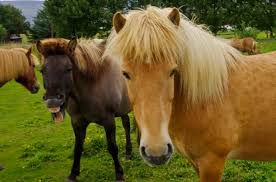
The first animal to be domesticated was
almost certainly the dog, which was bred from wolves. It was followed by species
such as the cat, horse, camel, llama, and aurochs (a species of wild cattle),
and also by the Asian jungle fowl, which is the ancestor of today’s chickens.
Through selective breeding, each of these animals has been turned into forms
that are particularly suitable for human use. Today, many domesticated animals,
including chickens, vastly outnumber their wild counterparts. In some cases,
such as the horse, the original wild species has died out altogether.
Over the centuries, many domesticated
animals have been introduced into different parts of the world only to escape
and establish themselves in the wild. Together with stowaway pests such as rats,
these feral animals have often had a highly damaging effect on native wildlife.
Cats, for example, have inflicted great damage on Australia’s smaller
marsupials, and feral pigs and goats continue to be serious problems for the
native wildlife of the Galápagos Islands.
Despite the growth of domestication,
humans continue to hunt some wild animals. Some forms of hunting are carried out
mainly for sport, but others provide food or animal products. Until recently,
one of the most significant of these forms of hunting was whaling, which reduced
many whale stocks to the brink of extinction. Today, highly efficient sea
fishing threatens some species of fish with the same fate (see
Fisheries).
Since the beginning of agriculture, the
human population has increased by more than two thousand times. To provide the
land needed for growing food and housing people, large areas of Earth’s
landscapes have been completely transformed. Forests have been cut down,
wetlands drained, and deserts irrigated, reducing these natural habitats to a
fraction of their former extent.
Some species of animals have managed to
adapt to these changes. A few, such as the brown rat, raccoon, and house
sparrow, have benefited by exploiting the new opportunities that have opened up
and have successfully taken up life on farms, or in towns and cities. But most
animals have specialized ways of life that make them dependent on a particular
kind of habitat. With the destruction of their habitats, their number inevitably
declines.
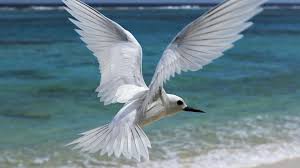
During the last century or so, animals
have also had to face additional threats from human activities. Foremost among
these are environmental pollution and the increasing demand for resources, such
as timber and fresh water. For some animals, the combination of these changes
has proved so damaging that their numbers are now below the level needed to
guarantee survival.
Across the world, efforts are currently
under way to address this urgent problem (see Endangered Species). In the
most extreme cases, gravely threatened animals can be helped by taking them into
captivity and then releasing them once breeding programs have increased their
number. One species that was restored in this way is the Hawaiian mountain goose
or nēnē. In the 1950s, its population had been reduced to about 25 birds.
Captive breeding has since helped the population increase, although the nēnē
remains on the endangered list.
While captive breeding is a useful
emergency measure, it cannot assure the long-term survival of a species. Today
animal protection focuses primarily on the preservation of entire habitats, an
approach that maintains the necessary links between the different species the
habitats support. With the continued growth in the world’s human population,
habitat preservation will require a sustained reduction in our use of the
world’s resources to minimize our impact on the natural world.


No comments:
Post a Comment